
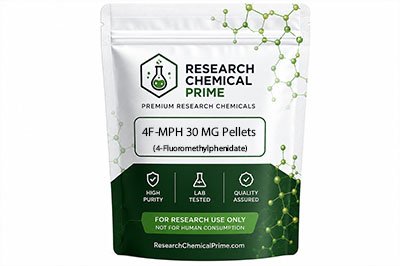
4F-MPH 30 mg Pellets | Phenidate Analytical Reference Standard
4F-MPH (4-Fluoromethylphenidate) is a specialized fluorinated phenidate derivative. Due to its distinct molecular architecture, it serves as a critical reference standard for advanced scientific investigation into monoamine transporter dynamics, receptor kinetics, and structure-activity relationships (SARs) within the broader phenidate class.
Supplied in precisely compressed 30 mg pellets, this format is specifically engineered for laboratories requiring exceptional dosing consistency and rapid dissolution in analytical solvents. It eliminates the static loss, aerosolization risks, and cross-contamination associated with manual micro-weighing of raw powders, ensuring reproducible results for quantitative in vitro workflows.
Key Features & Quality Assurance
- High Analytical Purity (≥99%): Rigorously verified via HPLC-UV and GC-MS to ensure reliable baseline data for sensitive assays.
- Standardized Analytical Load: Each 5 mm pellet contains exactly 30 ±1.5 mg of the active compound, verified through stringent uniformity testing (n=10).
- Optimized Dissolution Matrix: Formulated with microcrystalline cellulose and magnesium stearate to guarantee an in vitro disintegration time of <10 minutes, facilitating accurate stock solution preparation.
- Comprehensive Documentation: Every batch is accompanied by a Certificate of Analysis (CoA), Material Safety Data Sheet (MSDS), and stability data.
Primary Research Applications
- Transporter Affinity Studies: In vitro evaluation of ligand binding and reuptake inhibition at dopamine (DAT) and norepinephrine (NET) transporters.
- Comparative Pharmacological Profiling: Benchmarking against classical methylphenidate to map the structural and kinetic impacts of the 4-fluoro substitution.
- In Vitro Metabolic Profiling: Investigation of enzymatic degradation pathways and metabolic stability in controlled cellular or microsomal models.
- Forensic & Analytical Reference: Utilized as a certified calibration standard for method validation and detection in toxicological laboratories (LC-MS/MS, GC-MS).
Technical Specifications
| Chemical Name | Methyl 2-(4-fluorophenyl)-2-(piperidin-2-yl)acetate |
| Molecular Formula | C₁₄H₁₈FNO₂ |
| Molecular Mass | 251.30 g/mol |
| Active Ingredient | 4F-MPH Hydrochloride |
| Formulation | Compressed 30 mg pellets (5 mm diameter) |
| Purity | ≥99% (HPLC-UV & GC-MS Verified) |
| Solubility | Freely soluble in ethanol, methanol, DMSO; moderately soluble in water |
| Disintegration Time | <10 minutes (in vitro) |
Handling & Safety Protocols for Researchers
- Controlled Environment: Handle exclusively in a professional, ventilated laboratory setting. Use of a fume hood with an air velocity of ≥0.5 m/s is mandatory to prevent aerosol exposure.
- Mandatory PPE: Always utilize appropriate Personal Protective Equipment, including a laboratory coat, chemical-resistant nitrile gloves, safety glasses, and an FFP2 mask when handling bulk quantities.
- Static Control: Utilize antistatic workbenches to prevent powder dispersion and ensure accurate handling.
- Exposure Protocol:
- Skin Contact: Wash immediately and thoroughly with soap and water.
- Eye Contact: Rinse cautiously with saline solution or water for at least 15 minutes. Seek professional medical attention.
- Inhalation: Remove person to fresh air and keep comfortable for breathing. Medical supervision is recommended if symptoms persist.
- ⚠️ Critical Warning: This product is an analytical reference standard only. It is NOT approved, tested, or intended for human or animal consumption, therapeutic use, or household application.
Frequently Asked Questions (FAQ)
Why is this supplied in compressed pellet form?
The compressed pellet matrix provides a standardized, easily dissolvable substrate for rapid and homogeneous extraction into analytical solvents (e.g., DMSO, methanol). This eliminates the static loss, aerosolization risks, and weighing errors associated with handling raw phenidate powders.
What analytical documentation is provided?
Each batch includes a comprehensive Certificate of Analysis (CoA) detailing HPLC-UV quantification, LC-MS/MS identity verification, uniformity test results, microbiological analysis, and residual solvent analysis (GC-MS), alongside an MSDS and stability report.
What are the regulatory requirements for purchasing?
This compound is strictly regulated in many jurisdictions (e.g., classified under Schedule II of the Dutch Opium Act or equivalent regional frameworks). It is permitted solely for authorized scientific research. The purchaser is solely responsible for verifying compliance and possessing any required institutional permits prior to ordering.

Reviews
There are no reviews yet.