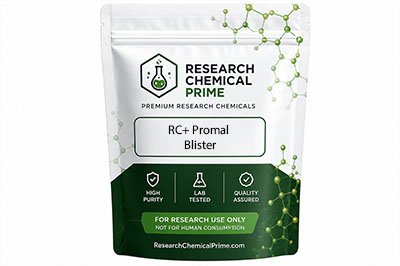
3-MeO-PCPr (Promal) — Scientific Chemical Reference
3-MeO-PCPr has been described as an arylcyclohexylamine-related compound structurally associated with the broader PCP/PCPr family.
Comparative structural research can examine how modifications to the amine-containing ring system and aromatic methoxy substitution influence:
- Molecular geometry
- Lipophilicity
- Chromatographic behavior
- Mass-spectral characteristics
- Metabolic transformation
- Molecular interactions in experimental systems
Structural relationships to compounds such as 3-MeO-PCP should be described as chemical comparisons, rather than as evidence that the compounds possess identical biological properties.
3. Analytical Characterization
Potential analytical techniques for investigating an unidentified or emerging compound of this type include:
HPLC / UHPLC
Used for chromatographic separation and analytical characterization.
LC-MS/MS
Can support compound detection and targeted analytical measurements.
High-resolution mass spectrometry (HRMS)
Can assist with accurate-mass measurements and proposed elemental composition.
GC-MS
May be useful for identification or degradation-product studies where the compound’s physical and chemical properties permit appropriate analysis.
NMR spectroscopy
Can provide detailed structural information and help confirm molecular connectivity.
FTIR spectroscopy
Can provide complementary information about functional groups.
For rigorous identity confirmation, complementary analytical methods should be considered rather than relying on a single measurement.
4. Research Applications
Potential non-human research areas include:
- Analytical identification of emerging research compounds
- Structure–activity relationship research
- Comparative arylcyclohexylamine chemistry
- Molecular-structure characterization
- Metabolism and biotransformation studies
- Forensic toxicology method development
- Development of analytical detection protocols
- Computational molecular modeling
- Comparative spectroscopic research
Research involving receptor systems should be conducted only within appropriately controlled experimental models and institutional procedures.
5. Comparative Structural Research
A principal scientific interest in compounds within this structural family is understanding how relatively small molecular modifications affect measurable properties.
Researchers may compare:
- Aromatic substitution patterns
- Ring-system modifications
- Molecular mass
- Chromatographic retention
- Mass-spectral fragmentation
- Metabolic transformation
- Predicted physicochemical properties
Such comparisons can contribute to broader structure–activity relationship datasets without assuming that a structural similarity necessarily produces the same biological activity.
6. Quality and Batch Documentation
The supplied description states a purity of ≥98.7% and refers to HPLC and NMR testing.
These should be considered supplier-provided claims unless supported by the corresponding batch-specific analytical report.
Useful documentation may include:
- Certificate of Analysis
- Batch or lot number
- Identity testing
- HPLC/UHPLC chromatogram
- Mass-spectrometric data
- NMR spectrum
- Quantitative assay
- Residual-solvent analysis where applicable
- Stability information
A numerical purity claim should not be treated as independently established without supporting analytical evidence.
7. Laboratory Safety
3-MeO-PCPr should be treated as an experimental research chemical requiring appropriate laboratory controls.
General chemical-hygiene practices include:
- Appropriate PPE
- Controlled laboratory access
- Proper labeling
- Appropriate containment
- Consultation of the applicable SDS
- Proper chemical-waste management
- Institutional chemical-hygiene procedures
Because toxicological and human safety information for emerging compounds can be limited, absence of reported adverse findings should not be interpreted as evidence of safety.
8. Storage and Stability
The original description recommends cool, dry and light-protected storage.
Specific storage temperatures and shelf-life claims should be based on compound- and formulation-specific stability data rather than assumed from general handling practices.
Relevant stability variables can include:
- Temperature
- Light
- Humidity
- Oxygen exposure
- Container compatibility
- Formulation composition
9. Regulatory Considerations
The regulatory classification of emerging research chemicals varies between jurisdictions and can change over time.
Statements such as “not regulated” or “not covered by analogue legislation” should therefore not be presented as universal legal conclusions. Current official legislation and competent regulatory authorities should be consulted for the relevant jurisdiction.
10. Scientific Limitations
Available information about emerging arylcyclohexamine-related compounds may be considerably more limited than information available for established pharmaceutical substances.
Consequently:
- Structural similarity does not establish identical pharmacology.
- In-vitro findings should not automatically be extrapolated to humans.
- Supplier specifications should be distinguished from independently generated analytical results.
- Absence of clinical studies means clinical safety and efficacy cannot be established.
- Regulatory status should be independently checked.
11. Research-Only Disclaimer
This reference is provided for scientific and educational purposes only. It does not provide instructions for human consumption, dosing, administration, recreational use, self-experimentation, or acquisition.
All laboratory work should be conducted by appropriately qualified personnel under applicable institutional safety procedures and regulations.


Reviews
There are no reviews yet.