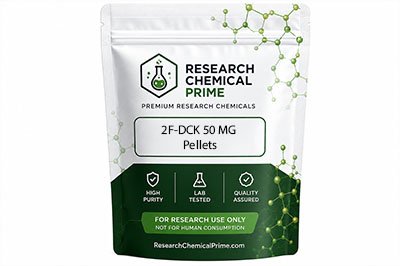
2F-DCK (2-Fluorodeschloroketamine)
2F-DCK is a fluorinated arylcyclohexylamine-related research compound that has been investigated in the context of dissociative pharmacology and NMDA-receptor-related research.
The compound is structurally related to ketamine and deschloroketamine but should be regarded as a distinct chemical entity. Pharmacological findings from ketamine or other arylcyclohexylamines should not automatically be assumed to apply to 2F-DCK.
Because the available scientific literature is considerably more limited than that for established pharmaceutical compounds, conclusions regarding pharmacokinetics, metabolism, toxicity, therapeutic potential, and long-term effects remain subject to uncertainty.
2. Chemical and Structural Context
2F-DCK belongs to a broader group of arylcyclohexylamine compounds containing a substituted cyclohexanone framework and an aromatic component.
The fluorine substitution distinguishes 2F-DCK from deschloroketamine and illustrates how relatively small structural modifications can be investigated in structure–activity relationship research.
Important research considerations may include:
- Molecular structure
- Stereochemistry
- Salt versus free-base form
- Molecular identity
- Purity and related substances
- Metabolic transformation
- Analytical differentiation from structurally related compounds
4. Pharmacological Research Context
2F-DCK has been discussed in relation to NMDA receptor antagonism and dissociative pharmacology.
Research involving NMDA receptor systems may examine:
- Receptor-mediated signaling
- Glutamatergic neurotransmission
- Ion-channel pharmacology
- Structure–activity relationships
- Comparative pharmacology of arylcyclohexylamines
- Cellular and molecular mechanisms associated with NMDA-receptor modulation
Statements describing 2F-DCK as producing a particular subjective experience, duration, onset, or therapeutic effect should not be treated as established clinical characteristics without appropriate evidence.
5. Potential Scientific Research Areas
Non-clinical investigations may encompass:
Neuropharmacology
- NMDA receptor research
- Glutamatergic signaling
- Comparative studies of dissociative compounds
- Neurotransmitter-system investigations
Medicinal Chemistry
- Fluorinated analogue research
- Structure–activity relationship studies
- Molecular modelling
- Ligand-receptor interaction research
Analytical Chemistry
- Chromatographic identification
- Mass-spectrometric characterization
- Reference-material development
- Differentiation of structurally related arylcyclohexylamines
Forensic and Toxicological Chemistry
- Analytical detection methods
- Identification of emerging psychoactive substances
- Metabolite investigations
- Biological-sample analysis
These categories describe potential scientific applications and do not constitute instructions for experimentation involving humans.
6. Pellet Form
The supplied material is described as round, relatively uniform pellets with an approximate total pellet mass of 250 mg and a stated 2F-DCK content.
Pellet dimensions, mass, and active-compound content should be regarded as supplier specifications unless independently verified.
Physical uniformity alone does not demonstrate uniform chemical distribution or analytical accuracy.
7. Analytical Characterization
Appropriate analytical characterization may be used to establish:
- Molecular identity
- Chemical composition
- Assay/purity
- Related compounds
- Degradation products
- Residual solvents
- Elemental impurities, where applicable
Potential analytical approaches may include validated chromatographic and spectrometric techniques appropriate to the compound and research objective.
The supplied claims of ≥99% HPLC purity, heavy-metal limits, microbiological sterility, and a 24-month shelf life should not be represented as independently verified unless supported by appropriate batch-specific documentation.
In particular, “sterile” should not be used as a confirmed specification without validated microbiological testing and appropriate manufacturing controls.
8. Safety Considerations
2F-DCK should be treated as a pharmacologically active research compound with an incompletely characterized safety profile.
Potential hazards associated with dissociative pharmacology may include effects involving:
- Central nervous system function
- Coordination and perception
- Cardiovascular parameters
- Cognitive function
- Nausea or other adverse physiological responses
The limited amount of long-term research means that absence of documented hazards should not be interpreted as evidence of safety.
Claims that 2F-DCK causes less hepatotoxicity, less bladder irritation, or otherwise has a superior safety profile compared with ketamine or other compounds require appropriate comparative evidence and should not be presented as established facts.
9. Laboratory Safety
Appropriate laboratory chemical-safety procedures should be followed when handling 2F-DCK or related research materials.
General precautions include:
- Avoid unnecessary exposure.
- Prevent contact with skin and eyes.
- Avoid generating or inhaling particulate material.
- Use suitable laboratory PPE.
- Apply appropriate engineering controls.
- Keep containers clearly labeled.
- Maintain accurate batch records.
- Restrict access to authorized laboratory personnel.
- Follow institutional procedures for accidental contamination and chemical waste.
The applicable Safety Data Sheet should be consulted before laboratory handling.
10. Human and Animal Use
This reference does not establish 2F-DCK as a medicine or therapeutic substance.
It intentionally excludes:
- Human dosing information
- Routes of administration
- Recreational-use guidance
- Instructions for achieving dissociative effects
- Combination recommendations
- Preparation or modification instructions
Animal research, where scientifically justified, should only be performed under applicable institutional oversight and approved ethical procedures.
11. Regulatory Considerations
The legal status of 2F-DCK can vary considerably between jurisdictions and may change as legislation is updated.
A statement that 2F-DCK is definitively controlled or uncontrolled in a particular country should therefore be based on the current official legislation and competent regulatory authorities.
Structural similarity to ketamine does not, by itself, establish the legal classification of 2F-DCK.
12. Storage and Stability
The supplied material is described as having a proposed shelf life of 24 months when stored below 25°C and as being sensitive to light.
These characteristics should be treated as supplier-provided information unless supported by appropriate stability testing.
For laboratory management:
- Keep the material in appropriately labeled, closed packaging.
- Protect it from environmental conditions identified by the SDS.
- Minimize unnecessary exposure to light and moisture where appropriate.
- Maintain batch and storage records.
- Do not assign a definitive expiration date without supporting stability data.
13. Documentation
Appropriate documentation for a research material may include:
- Safety Data Sheet (SDS)
- Certificate of Analysis (CoA), where applicable
- Batch or lot number
- Analytical identification data
- Chromatographic results
- Mass-spectrometric results
- Supplier specification sheet
- Storage information
- Relevant regulatory documentation
Documentation should correspond specifically to the material and batch being investigated.
14. Scientific Limitations
Compared with extensively studied pharmaceutical compounds, the scientific evidence concerning 2F-DCK is limited.
Areas requiring particular caution include:
- Human pharmacokinetics
- Metabolism
- Long-term toxicity
- Dependence potential
- Drug interactions
- Therapeutic efficacy
- Organ-specific toxicity
- Long-term neurological effects
Consequently, information concerning ketamine, deschloroketamine, or other arylcyclohexylamines should not automatically be extrapolated to 2F-DCK.
15. Frequently Asked Questions
What is 2F-DCK?
2F-DCK is a fluorinated arylcyclohexamine-related research compound that has been investigated in the context of dissociative and NMDA-receptor pharmacology.
Is 2F-DCK the same as ketamine?
No. Although the compounds are structurally related, 2F-DCK and ketamine are different chemical entities.
Is 2F-DCK an approved medicine?
This reference entry does not identify 2F-DCK as an approved pharmaceutical medicine.
What is 2F-DCK studied for?
Potential research areas include NMDA receptor pharmacology, glutamatergic signaling, medicinal chemistry, structure–activity relationships, and analytical characterization.
Is the stated purity verified?
A stated purity value should only be regarded as verified when supported by appropriate batch-specific analytical documentation.
Is 2F-DCK safe?
There is insufficient evidence to establish 2F-DCK as safe for human use. Its long-term toxicological and pharmacological profile remains incompletely characterized.
Is 2F-DCK legal?
Its legal status varies by jurisdiction and should be determined using current official legislation and regulatory sources.


Reviews
There are no reviews yet.