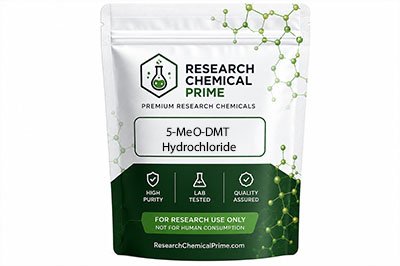
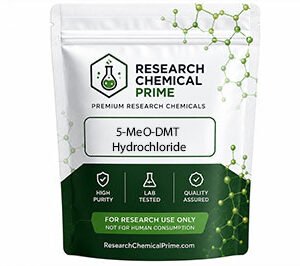
5-MeO-DMT Hydrochloride | Tryptamine Analytical Reference Standard
5-MeO-DMT Hydrochloride (5-Methoxy-N,N-dimethyltryptamine HCl) is a specialized semi-synthetic substituted tryptamine derivative. Characterized by its distinct 5-methoxy and N,N-dimethyl substitution pattern, it serves as a critical reference standard for advanced scientific investigation into serotonergic signaling pathways, receptor kinetics, and structure-activity relationships (SARs) within the broader tryptamine class.
Supplied as a highly stable hydrochloride salt, this format is specifically engineered for laboratories requiring exceptional aqueous solubility and precise stoichiometry. It eliminates the handling difficulties and poor water solubility associated with freebase tryptamines, ensuring reproducible results for quantitative in vitro workflows and cellular assays.
Key Features & Quality Assurance
- Exceptional Analytical Purity (≥98%): Rigorously verified via HPLC-UV and MS/MS to ensure reliable baseline data and minimal synthetic impurities.
- Optimized Aqueous Solubility: The hydrochloride salt form exhibits high solubility in water (>50 mg/mL) and polar buffers, facilitating precise in vitro stock solution preparation without the need for high concentrations of organic co-solvents.
- Comprehensive Analytical Certification: Every batch is accompanied by an extensive analytical dossier, including HPLC-UV chromatograms, MS/MS fragmentation data, and residual solvent analysis meeting ICH Q3C guidelines.
- Precision Formulation: Manufactured under strict quality control protocols to guarantee exact compositional reliability for controlled in vitro assay calibration.
Primary Research Applications
- Receptor Binding Assays: In vitro evaluation of ligand affinity and agonist profiles at specific serotonergic receptor subtypes, particularly 5-HT1A and 5-HT2A.
- Intracellular Signaling Studies: Investigation of downstream signaling cascades, including cAMP accumulation and β-arrestin recruitment assays in controlled cellular models.
- In Vitro Enzyme Kinetics: Evaluation of metabolic degradation pathways, specifically focusing on MAO-A enzymatic interactions and clearance rates in microsomal models.
- Forensic & Analytical Reference: Utilized as a certified calibration standard for method validation and detection in toxicological laboratories (LC-MS/MS).
Technical Specifications
| Chemical Name | 5-Methoxy-N,N-dimethyltryptamine hydrochloride |
| Molecular Formula | C₁₃H₁₈N₂O · HCl |
| Molecular Weight | 254.75 g/mol |
| Physical Form | White to light yellow crystalline powder |
| Purity | ≥98% (HPLC-UV Verified) |
| Melting Point | 243–247°C (with decomposition) |
| Solubility | High in water (>50 mg/mL), methanol, and PBS |
Handling & Stability Considerations
- Hygroscopic Nature: The hydrochloride salt is hygroscopic. Close the container promptly after use and store in a dry environment to prevent hydrolytic degradation.
- Controlled Environment: Handle exclusively in a professional, ventilated laboratory setting (preferably under a certified fume hood) to prevent aerosol exposure.
- Mandatory PPE: Always utilize appropriate Personal Protective Equipment, including a laboratory coat, chemical-resistant nitrile gloves, and safety glasses.
- In Vitro Concentration Guidelines:
- Cell Cultures: 1 nM – 10 µM (in PBS/DMEM, ≤0.1% co-solvent)
- Receptor Assays: 0.1 – 100 µM (in Tris-HCl buffer, pH 7.4)
- ⚠️ Critical Warning: This product is an analytical reference standard only. It is NOT approved, tested, or intended for human or animal consumption, therapeutic use, or household application.
Frequently Asked Questions (FAQ)
What are the advantages of the HCl salt over the freebase?
The hydrochloride salt form offers vastly superior aqueous solubility and extended shelf stability at room temperature compared to the freebase. This makes it the preferred format for preparing aqueous stock solutions for cellular assays and liquid chromatography without requiring high concentrations of organic solvents like DMSO.
How is this compound detected in analytical laboratories?
It is specifically detected and quantified in forensic and toxicological laboratories using advanced techniques such as LC-MS/MS (recognizing the 5-MeO-DMT + HCl adduct) and monitoring characteristic MS/MS fragmentation ions (m/z 219 → 174, 160).
What is the recommended waste disposal protocol?
Follow standard hazardous chemical waste protocols: neutralize with sodium bicarbonate (pH 7-8), adsorb with activated carbon, and dispose of as hazardous chemical waste (UN 3249, Class 6.1) in accordance with local environmental regulations.
What is the regulatory status of this compound?
Regulatory status varies significantly by jurisdiction. Substituted tryptamines are frequently subject to strict controlled substance legislation or analogue acts. It is permitted solely for authorized scientific research. The purchaser is solely responsible for verifying compliance and possessing any required institutional permits prior to ordering.

Reviews
There are no reviews yet.