
AMT (Alpha-Methyltryptamine) — Scientific Chemical Reference
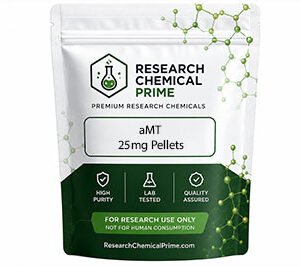
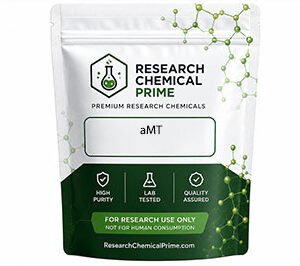
α-Methyltryptamine (AMT) is a synthetic tryptamine rc chemicals that has been investigated in historical and contemporary scientific literature concerning monoaminergic systems.
The compound can be examined as part of research chems into substituted tryptamines, molecular structure, analytical identification, metabolism, and structure–activity relationships.
This page is intended exclusively as a scientific and laboratory reference. It does not provide human-use, dosing, microdosing, or self-experimentation instructions.
Structural & Molecular Research
AMT may be investigated in research involving:
- Substituted tryptamine chemistry
- Molecular structure characterization
- Structure–activity relationship research
- Comparative analytical studies
- Metabolite characterization
- Chemical stability and degradation
- Computational molecular modeling
- Forensic analytical methodology
Research Applications
Analytical Chemistry
AMT can be examined using chromatographic and spectroscopic methods to establish chemical identity, characterize impurities, and investigate degradation products.
Forensic Research
Analytical research may involve development or validation of methods for detecting and identifying AMT and related tryptamine compounds in controlled laboratory samples.
Molecular Pharmacology
Non-clinical research may investigate molecular interactions involving serotonergic and other monoaminergic systems. Such work should be conducted using appropriate validated experimental models.
Structure–Activity Relationship Research
AMT can be compared with structurally related tryptamines to investigate relationships between molecular structure and experimentally observed properties.
Analytical Characterization
Potential analytical techniques include:
- HPLC/UHPLC — purity and chromatographic profiling
- LC-MS/MS — molecular identification and targeted detection
- GC-MS — analytical identification where appropriate
- HRMS — accurate-mass characterization
- NMR spectroscopy — structural confirmation
- FTIR spectroscopy — functional-group characterization
The supplied source states ≥97% HPLC purity and an impurity specification based on GC-MS. These should be treated as high purity research chemicals supplier-reported specifications unless supported by corresponding batch-specific analytical documentation.
Product Specifications
- Compound: α-Methyltryptamine (AMT)
- CAS: 61-50-7
- Formula: C₁₁H₁₄N₂
- Molecular weight: 174.24 g/mol
- Chemical class: Substituted tryptamine
- Form: Powder or pellet, depending on supplied formulation
- Purity: ≥97% HPLC — supplier-reported specification
- Impurity specification: <0.5% GC-MS — supplier-reported specification requiring documentation
Quality Control & Documentation
Where available, batch documentation may include:
- Certificate of Analysis (CoA)
- Batch/lot number
- HPLC chromatogram
- GC-MS results
- LC-MS data
- NMR spectrum
- Impurity profile
- Residual-solvent analysis
- SDS
Numerical purity and impurity values should only be presented as verified when supported by the relevant analytical report.
Laboratory Handling
AMT should be handled only by appropriately trained personnel following established institutional chemical-safety procedures.
Researchers should consult the current SDS and perform an appropriate hazard assessment before handling the compound. Appropriate PPE, ventilation, contamination controls, labeling, and chemical-waste procedures should be maintained.
This page does not provide instructions for administration, dosing, human experimentation, or combining AMT with other substances.
Storage
The supplied description recommends storage in a cool, dry environment below 25°C.
This should be treated as a high purity research chemicals supplier recommendation unless supported by validated stability data. Actual storage requirements should be determined from the current SDS and available stability documentation.
Regulatory Information
The legal and regulatory status of AMT can vary by jurisdiction and may change over time.
Statements concerning specific scheduling under the Dutch Opium Act, Belgian controlled-substance legislation, or EU-level new-psychoactive-substance frameworks should be checked against the current official legislation before publication.
Researchers and institutions are responsible for determining applicable requirements concerning possession, analysis, importation, and research authorization.
Safety Considerations
AMT is a biologically active tryptamine-related compound and should not be treated as an ordinary laboratory reagent without an appropriate risk assessment.
Relevant research considerations include:
- Limited toxicological information
- Potential biological activity
- Possible cardiovascular and neurological hazards
- Potential regulatory restrictions
- Need for controlled laboratory handling
- Importance of validated analytical characterization
A stated purity percentage does not establish safety for human use.
Research-Only Disclaimer
For laboratory, analytical, forensic, and scientific research purposes only. Not for human consumption, therapeutic use, recreational use, microdosing, or self-experimentation.
Chemical identity, analytical results, storage conditions, quality specifications, and regulatory status should be confirmed using current technical documentation and applicable official sources.
FAQ
What is AMT?
AMT, or α-Methyltryptamine, is a substituted tryptamine with CAS number 61-50-7 and molecular formula C₁₁H₁₄N₂.
What is the molecular weight of AMT?
The molecular weight is approximately 174.24 g/mol.
How can AMT be analyzed?
Potential analytical techniques include HPLC/UHPLC, LC-MS/MS, GC-MS, HRMS, NMR, and FTIR.
Is the stated ≥97% purity independently verified?
The supplied description states ≥97% HPLC purity. This should be regarded as a supplier specification unless supported by batch-specific analytical documentation.
What research areas may involve AMT?
Potential areas include analytical chemistry, forensic identification, substituted-tryptamine research chems, molecular characterization, metabolism studies, and structure–activity relationship research chems.
Is AMT legally controlled?
Regulatory status varies by jurisdiction and can change. Current official legislation should be consulted rather than relying on a generalized legal classification.
Is AMT intended for human use?
No. This reference is limited to scientific, analytical, forensic, and laboratory research chems contexts.
Reviews
There are no reviews yet.