
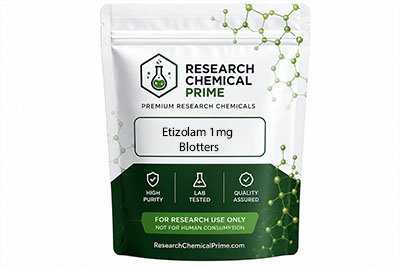
Etizolam 1mg Analytical Substrates | Thienodiazepine Reference Standard
Etizolam Analytical Substrates consist of high-purity Etizolam (4-(2-chlorophenyl)-2-ethyl-9-methyl-6H-thieno[3,2-f][1,2,4]triazolo[4,3-a][1,4]diazepine) uniformly deposited onto standardized analytical-grade cellulose matrices. This specialized semi-synthetic thienodiazepine derivative serves as a critical reference standard for advanced scientific investigation into GABAergic signaling pathways, receptor kinetics, and structure-activity relationships (SARs) within the broader benzodiazepine class.
Supplied in this specific substrate format, the product is engineered for laboratories requiring precise, reproducible extraction of milligram-quantity compounds into analytical solvents. It eliminates the static loss, environmental degradation, and weighing errors inherently associated with handling raw thienodiazepine powders, ensuring highly accurate molar concentrations for quantitative in vitro workflows.
Key Features & Quality Assurance
- Precise Nominal Load: Each standardized 5×5 mm substrate unit contains a verified 1mg load of active compound, ensuring consistent and reproducible extraction yields for stock solution preparation.
- Exceptional Analytical Purity (≥98%): Rigorously verified via HPLC-MS to ensure reliable baseline data and minimal synthetic impurities.
- Optimized Extraction Matrix: The pharmaceutical-grade cellulose substrate allows for rapid, near-complete dissolution of the active compound into polar organic solvents for immediate chromatographic analysis.
- Comprehensive Documentation: Every batch is accompanied by detailed certificates confirming purity, structural verification, and deposition uniformity.
Primary Research Applications
- Receptor Binding Assays: In vitro evaluation of ligand affinity and positive allosteric modulatory effects at specific GABA-A receptor subtypes.
- Comparative Structure-Activity Relationship (SAR) Studies: Analytical comparison with classical benzodiazepines to map the pharmacological impact of the thieno-triazolo ring fusion on receptor binding profiles.
- In Vitro Metabolic Profiling: Investigation of enzymatic degradation pathways and metabolic stability in controlled microsomal or cellular models.
- Forensic & Analytical Reference: Utilized as a certified calibration standard for method validation, limit of detection (LOD) testing, and chromatographic calibration in toxicological laboratories.
Technical Specifications
| Chemical Name | 4-(2-Chlorophenyl)-2-ethyl-9-methyl-6H-thieno[3,2-f][1,2,4]triazolo[4,3-a][1,4]diazepine |
| Molecular Formula | C₁₇H₁₅ClN₄S |
| Molar Mass | ~342.84 g/mol |
| Substrate Format | 5 × 5 mm analytical cellulose matrix |
| Nominal Load | 1 mg per unit |
| Purity | ≥98% (HPLC-MS Verified) |
| Solubility | Compatible with HPLC-grade methanol, ethanol, and DMSO for rapid extraction |
Handling & Stability Considerations
- Light & Moisture Sensitivity: Thienodiazepine derivatives are prone to photodegradation and hydrolytic breakdown. Store strictly in light-proof, airtight packaging with desiccant.
- Temperature Control: For long-term archival stability, store at 2–8°C. Maintain relative humidity at <40% to ensure a shelf life of up to 24 months.
- Controlled Environment: Handle exclusively in a professional, ventilated laboratory setting (preferably under a certified laminar flow hood or fume hood) during solvent extraction to prevent aerosol exposure.
- Mandatory PPE: Always utilize appropriate Personal Protective Equipment, including a laboratory coat, chemical-resistant nitrile gloves, and safety glasses.
- Access Control: Store strictly in a secure, access-controlled laboratory environment, restricted to authorized scientific personnel only.
- In Vitro Concentration Guidelines: For cellular receptor assays, typical working concentrations require careful optimization in the nanomolar (nM) to micromolar (µM) range, prepared via precise solvent extraction of the substrates.
- ⚠️ Critical Warning: This product is an analytical reference standard only. It is NOT approved, tested, or intended for human or animal consumption, therapeutic use, or household application.
Frequently Asked Questions (FAQ)
Why use an analytical substrate instead of raw powder?
Handling raw thienodiazepine powders is highly susceptible to static loss, environmental degradation, and weighing errors. The standardized cellulose substrate provides a precise surface area for reproducible solvent extraction protocols, ensuring accurate molar concentrations for in vitro assays.
How should these be prepared for LC-MS/GC-MS analysis?
The substrate should be submerged in a precise, measured volume of HPLC-grade methanol, ethanol, or DMSO, agitated gently to facilitate complete extraction of the active compound, and then filtered through a 0.22 µm PTFE syringe filter prior to chromatographic injection.
Is this product suitable for biological administration?
Absolutely not. This product is strictly intended for in vitro analytical and biochemical assays in controlled laboratory environments. Any form of biological administration is strictly prohibited and falls entirely outside the intended scientific use of this reference standard.
What documentation is provided with the order?
Every shipment includes a comprehensive Certificate of Analysis (CoA), chromatographic purity profile, batch-specific stability information, and a Material Safety Data Sheet (MSDS) to ensure complete traceability and analytical confidence.


Reviews
There are no reviews yet.