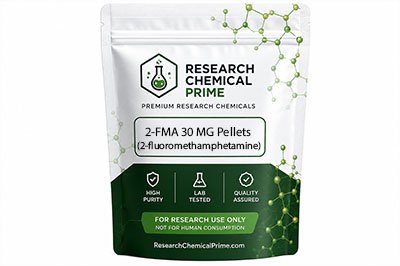
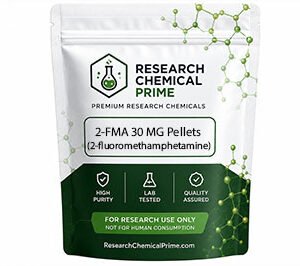
2-FMA 30 mg Pellets | Phenethylamine Analytical Reference Standard
2-FMA (2-Fluoroamphetamine) is a specialized fluorinated phenethylamine derivative, characterized by a fluorine substitution at the ortho position of the phenyl ring. Due to its distinct molecular architecture, it serves as a critical reference standard for advanced scientific investigation into monoamine transporter dynamics, receptor kinetics, and structure-activity relationships (SARs) within the broader phenethylamine class.
Supplied in precisely compressed 30 mg pellets, this format is specifically engineered for laboratories requiring exceptional dosing consistency and rapid dissolution in analytical solvents. It eliminates the static loss, aerosolization risks, and cross-contamination associated with manual micro-weighing of raw powders, ensuring reproducible results for quantitative in vitro workflows.
Key Features & Quality Assurance
- Standardized Analytical Load: Each 5 mm pellet contains exactly 30 mg of the active compound, verified through stringent uniformity testing (n=20).
- High Analytical Purity (≥98.5%): Rigorously verified via UPLC-MS/MS to ensure reliable baseline data for sensitive assays.
- Optimized Dissolution Matrix: Formulated to guarantee an in vitro disintegration time of <15 minutes (USP Apparatus II compliant), facilitating accurate stock solution preparation.
- Comprehensive Documentation: Every batch is accompanied by a Certificate of Analysis (CoA), Material Safety Data Sheet (MSDS), and stability report.
Primary Research Applications
- Transporter Affinity Studies: In vitro evaluation of ligand binding and reuptake inhibition at dopamine (DAT) and noradrenaline (NET) transporters.
- Comparative Structure-Activity Relationship (SAR) Studies: Analytical comparison with other fluoramphetamines to map the pharmacological impact of the ortho-fluoro substitution.
- In Vitro Metabolic Profiling: Investigation of enzymatic degradation pathways and metabolic stability in controlled microsomal or cellular models.
- Forensic & Analytical Reference: Utilized as a certified calibration standard for method validation and detection in toxicological laboratories (LC-MS/MS, GC-MS).
Technical Specifications
| Systematic Name | 1-(2-fluorophenyl)-2-aminopropane |
| Molecular Formula | C₉H₁₂FN |
| Molecular Mass | 153.20 g/mol |
| Formulation | Compressed 30 mg pellets (5 mm diameter, 50–70 N hardness) |
| Purity | ≥98.5% (UPLC-MS/MS Verified) |
| Solubility | Good in methanol and ethanol; moderate in water |
| Disintegration Time | <15 minutes (in vitro, USP Apparatus II) |
Handling & Safety Protocols for Researchers
- Controlled Environment: Handle exclusively in a professional, ventilated laboratory setting. Use of a fume hood with an air velocity of ≥0.5 m/s is mandatory to prevent aerosol exposure.
- Mandatory PPE: Always utilize appropriate Personal Protective Equipment, including Type 5/6 protective clothing, chemical-resistant nitrile gloves, safety glasses, and an FFP3 respirator mask when handling bulk quantities.
- Static Control: Utilize antistatic work surfaces to prevent powder dispersion and ensure accurate handling.
- Storage Requirements: Store in dry, dark, gas-tight blister packaging at 15–25°C with relative humidity <60%. Storage under inert gas (argon or nitrogen) is recommended for long-term stability.
- ⚠️ Critical Warning: This product is an analytical reference standard only. It is NOT approved, tested, or intended for human or animal consumption, therapeutic use, or household application.
Frequently Asked Questions (FAQ)
Why is this supplied in compressed pellet form?
The compressed pellet matrix provides a standardized, easily dissolvable substrate for rapid and homogeneous extraction into analytical solvents (e.g., methanol, ethanol). This eliminates the static loss, aerosolization risks, and weighing errors associated with handling raw phenethylamine powders.
What analytical documentation is provided?
Each batch includes a comprehensive Certificate of Analysis (CoA) detailing HPLC-DAD quantification, HRMS identity verification, uniformity test results (n=20), dissolution test data, and microbiological assessment according to Ph. Eur. standards, alongside an MSDS and stability report.
What are the regulatory requirements for purchasing?
This compound is strictly regulated in many jurisdictions (e.g., classified under Schedule II of the Dutch Opium Act or equivalent regional NPS frameworks). It is permitted solely for authorized scientific research. The purchaser is solely responsible for verifying compliance and possessing any required institutional permits prior to ordering.

Reviews
There are no reviews yet.