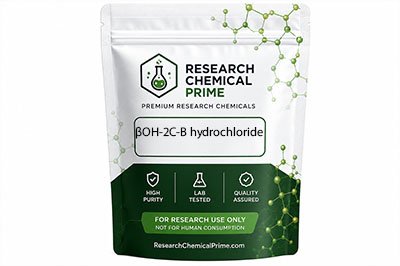
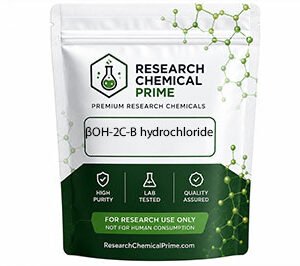
βOH-2C-B Hydrochloride | Phenethylamine Analytical Reference Standard
βOH-2C-B Hydrochloride (2-(4-bromo-2,5-dimethoxyphenyl)-2-hydroxyethanamine hydrochloride) is a specialized semi-synthetic substituted phenethylamine derivative. Structurally analogous to classical phenethylamines like 2C-B, but featuring a distinct hydroxy (–OH) substitution at the β-position of the ethylamine chain, it serves as a critical reference standard for advanced scientific investigation into monoaminergic signaling pathways, receptor kinetics, and structure-activity relationships (SARs) within the broader phenethylamine class.
Supplied as a highly stable hydrochloride salt, this format is specifically engineered for laboratories requiring exceptional chemical stability, precise stoichiometry, and reliable dissolution in aqueous analytical solvents. It eliminates the degradation risks and handling difficulties associated with freebase phenethylamines, ensuring reproducible results for quantitative in vitro workflows and instrumental analysis.
Key Features & Quality Assurance
- Exceptional Analytical Purity (≥98%): Rigorously verified via HPLC and NMR to ensure reliable baseline data and minimal synthetic impurities.
- Optimized Stability: The hydrochloride salt form significantly enhances crystallinity, aqueous solubility, and resistance to oxidative degradation, facilitating precise in vitro stock solution preparation.
- Distinct Binding Profile: The β-hydroxy substitution offers a unique structural-affinity profile compared to classical 2C-series analogs, making it highly valuable for comparative receptor selectivity and metabolic stability studies.
- Comprehensive Analytical Certification: Every batch is accompanied by detailed certificates confirming purity, structural confirmation, and absence of heavy metals or residual solvents (<0.01%).
Primary Research Applications
- Receptor Binding Assays: In vitro evaluation of ligand affinity and modulatory effects at specific serotonergic receptor subtypes, particularly 5-HT2A and 5-HT2C.
- Comparative Structure-Activity Relationship (SAR) Studies: Analytical comparison with 2C-B and other substituted phenethylamines to map the pharmacological impact of the β-hydroxy substitution on receptor binding kinetics.
- In Vitro Metabolic Profiling: Investigation of how the β-hydroxy group influences enzymatic degradation pathways and metabolic stability in controlled microsomal or cellular models.
- Forensic & Analytical Reference: Utilized as a certified calibration standard for method validation and detection in toxicological laboratories (LC-MS, GC-MS, FTIR, NMR).
Technical Specifications
| Chemical Name | 2-(4-bromo-2,5-dimethoxyphenyl)-2-hydroxyethanamine hydrochloride |
| Synonyms | β-Hydroxy-2C-B, β-OH-2C-B HCl |
| Molecular Formula | C₁₀H₁₅BrNO₃ · HCl |
| Molecular Mass | ~312.6 g/mol |
| Physical Form | White to pale yellow crystalline powder |
| Purity | ≥98% (HPLC & NMR Verified) |
| Solubility | Freely soluble in water, ethanol, and DMSO |
Handling & Stability Considerations
- Light & Moisture Sensitivity: Phenethylamine salts are prone to photodegradation and hydrolytic breakdown. Store strictly in airtight, light-proof containers with desiccant.
- Temperature Control: Maintain optimal stability by storing at 2–8°C in a dry, controlled environment.
- Controlled Environment: Handle exclusively in a professional, ventilated laboratory setting (preferably under a certified laminar flow hood or fume hood) to prevent aerosol exposure.
- Mandatory PPE: Always utilize appropriate Personal Protective Equipment, including a laboratory coat, chemical-resistant nitrile gloves, and safety glasses.
- In Vitro Concentration Guidelines: For cellular binding and metabolic assays, typical working concentrations require careful optimization in the micromolar (µM) range (e.g., 1–25 µM), depending on the specific cell line and assay protocol.
- ⚠️ Critical Warning: This product is an analytical reference standard only. It is NOT approved, tested, or intended for human or animal consumption, therapeutic use, or household application.
Frequently Asked Questions (FAQ)
What is the structural difference between βOH-2C-B and 2C-B?
βOH-2C-B contains an additional hydroxy (–OH) group at the β-position of the ethylamine chain. In in vitro assays, this substitution significantly alters the molecule’s polarity, receptor binding kinetics, and metabolic stability compared to the parent 2C-B compound, making it highly valuable for comparative SAR studies.
Is this product suitable for biological administration?
Absolutely not. This product is strictly intended for in vitro analytical and biochemical assays in controlled laboratory environments. Any form of biological administration is strictly prohibited and falls entirely outside the intended scientific use of this reference standard.
Why is the hydrochloride salt form preferred for research?
The HCl salt form provides superior aqueous solubility, enhanced chemical stability during storage, and allows for precise stoichiometric weighing and dosing compared to the freebase, making it the ideal format for rigorous in vitro laboratory workflows.
What is the regulatory status of this compound?
Regulatory status varies significantly by jurisdiction. Substituted phenethylamines are frequently subject to strict controlled substance legislation or analogue acts. It is permitted solely for authorized scientific research. The purchaser is solely responsible for verifying compliance and possessing any required institutional permits prior to ordering.
Reviews
There are no reviews yet.