
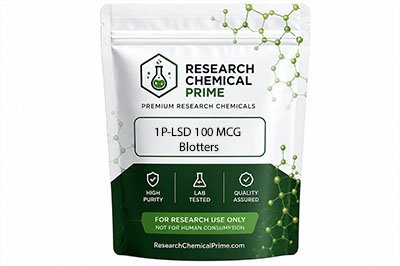
1P-LSD 100 mcg Blotters | Lysergamide Analytical Calibration Standard
1P-LSD 100 mcg Blotters consist of high-purity 1-Propionyl-lysergic acid diethylamide uniformly deposited onto analytical-grade cellulose substrate. This precise formulation serves as a critical reference standard for advanced in vitro analytical calibration, quantitative solvent extraction protocols, and serotonergic receptor binding research.
The standardized cellulose matrix is specifically engineered for laboratories requiring precise, reproducible extraction of lysergamides into analytical solvents (e.g., methanol, acetonitrile) without the static loss, degradation, or weighing errors associated with handling raw microgram-quantity powders.
Key Features & Quality Assurance
- Precise Nominal Load: Each standardized substrate unit contains a nominal load of 100 mcg of 1P-LSD, verified for uniform distribution to ensure consistent extraction yields.
- Exceptional Analytical Purity (≥98%): Rigorously verified via HPLC and LC-MS to ensure reliable baseline data, free from lysergic acid derivatives and synthetic impurities.
- Optimized Extraction Matrix: The high-grade cellulose substrate allows for rapid, near-complete dissolution of the active compound into polar organic solvents for immediate chromatographic analysis.
- Comprehensive Documentation: Every batch is accompanied by detailed certificates confirming purity, structural verification, and deposition uniformity.
Primary Research Applications
- Analytical Calibration: Utilized as a certified reference standard for method validation, limit of detection (LOD) testing, and calibration curves in forensic toxicology (LC-MS/MS, GC-MS).
- Receptor Binding Assays: In vitro evaluation of ligand affinity and agonist profiles at specific serotonergic receptor subtypes, particularly 5-HT2A and 5-HT1A.
- Quantitative Extraction Protocols: Standardization of liquid-liquid or solid-phase extraction methodologies for complex biological matrix analysis.
- Comparative SAR Studies: Analytical comparison with LSD and other N1-acylated lysergamides to map the impact of the propionyl group on receptor kinetics.
Technical Specifications
| Chemical Name | 1-Propionyl-lysergic acid diethylamide |
| Molecular Formula | C₂₂H₂₇N₃O₂ |
| Molecular Mass | 365.47 g/mol |
| Substrate | Analytical-grade cellulose matrix |
| Nominal Load | 100 mcg per unit |
| Purity | ≥98% (HPLC & LC-MS Verified) |
Handling & Stability Considerations
- Extreme Light & Oxygen Sensitivity: Lysergamides are highly prone to photodegradation and oxidative breakdown. Store strictly in amber, airtight containers under an inert argon atmosphere.
- Temperature Control: For long-term archival stability, store at -20°C. For short-term laboratory use, maintain at 2–8°C in a desiccated environment.
- Controlled Environment: Handle exclusively in a professional, ventilated laboratory setting (preferably under a certified fume hood) during solvent extraction to prevent aerosol exposure.
- Mandatory PPE: Always utilize appropriate Personal Protective Equipment, including a laboratory coat, chemical-resistant nitrile gloves, and safety glasses.
- ⚠️ Critical Warning: This product is an analytical reference standard only. It is NOT approved, tested, or intended for human or animal consumption, therapeutic use, or household application.
Frequently Asked Questions (FAQ)
Why use a cellulose substrate instead of raw powder?
Handling raw lysergamide powders in the microgram range is highly susceptible to static loss, environmental degradation, and weighing errors. The cellulose substrate provides a standardized surface area for precise, reproducible solvent extraction protocols, ensuring accurate molar concentrations for in vitro assays.
How should these be prepared for LC-MS analysis?
The substrate should be submerged in a precise volume of HPLC-grade methanol or acetonitrile, agitated gently to facilitate complete extraction of the active compound, and then filtered through a 0.22 µm PTFE syringe filter prior to chromatographic injection.
What is the regulatory status of this compound?
Regulatory status varies significantly by jurisdiction. N1-acylated lysergamides are frequently subject to strict controlled substance legislation or analogue acts. It is permitted solely for authorized scientific research. The purchaser is solely responsible for verifying compliance and possessing any required institutional permits prior to ordering.

Reviews
There are no reviews yet.