
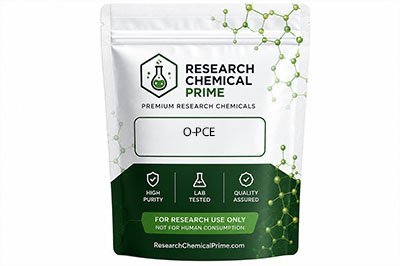
O-PCE (2′-Oxo-PCM) | Arylcyclohexylamine Analytical Reference Standard
O-PCE (2′-Oxo-PCM) is a specialized semi-synthetic substituted arylcyclohexylamine derivative. It serves as a critical reference standard for advanced scientific investigation into glutamatergic signaling pathways, NMDA receptor kinetics, and structure-activity relationships (SARs) within the broader arylcyclohexylamine class.
Supplied as a highly pure analytical standard, this format is specifically engineered for laboratories requiring exceptional chemical stability, precise stoichiometry, and reliable dissolution in analytical solvents. It ensures reproducible results for quantitative in vitro workflows and high-resolution instrumental analysis.
Key Features & Quality Assurance
- Exceptional Analytical Purity (≥98%): Rigorously verified via HPLC to ensure reliable baseline data and minimal synthetic impurities.
- Strict Batch Control: Every production batch undergoes comprehensive purity and stability control to guarantee optimum reliability for sensitive assays.
- Comprehensive Documentation: Supplied with a detailed, batch-specific Certificate of Analysis (CoA) and Material Safety Data Sheet (MSDS) to ensure complete traceability.
- Professional Packaging: Sealed in argon-filled, light-proof amber glass vials with desiccant to prevent oxidative degradation and ensure maximum chemical stability during transport and storage.
Primary Research Applications
- Receptor Binding Assays: In vitro evaluation of ligand affinity and antagonistic effects at N-methyl-D-aspartate (NMDA) receptor subtypes, alongside sigma and dopaminergic pathway interaction analyses.
- Comparative Structure-Activity Relationship (SAR) Studies: Analytical comparison with related arylcyclohexylamine compounds to map the pharmacological impact of the 2′-oxo substitution on receptor binding profiles.
- In Vitro Toxicological Screening: Investigation of cell viability, metabolic stability, and enzymatic degradation pathways in controlled microsomal or cellular models.
- Forensic & Analytical Reference: Utilized as a certified calibration standard for method validation, limit of detection (LOD) testing, and detection in toxicological laboratories (LC-MS, GC-MS, NMR).
Technical Specifications
| Chemical Name | Ethyl (1S,2S,4R,5R)-2-(2-oxo-2-phenylethyl)-5-methyl-2-azabicyclo[2.2.1]heptane-1-carboxylate |
| Alternative Name | 2′-Oxo-PCM (O-PCE) |
| Molecular Formula | C₁₈H₂₃NO₃ |
| Molecular Mass | 301.38 g/mol |
| CAS Number | Not officially registered (under evaluation) |
| Physical Form | White to light yellow crystalline powder |
| Purity | ≥98% (HPLC Verified) |
Handling & Stability Considerations
- Light & Moisture Sensitivity: Arylcyclohexylamine derivatives are prone to photodegradation and hydrolytic breakdown. Store strictly in airtight, light-proof amber glass vials with desiccant.
- Temperature Control: Maintain a shelf life of 24 months by storing at -20°C. For short-term laboratory use (up to 12 months), maintain at 2–8°C with relative humidity <30%.
- Controlled Environment: Handle exclusively in a professional, ventilated laboratory setting. Processing under a certified fume hood is mandatory to prevent aerosol exposure.
- Mandatory PPE: Always utilize appropriate Personal Protective Equipment, including a laboratory coat, chemical-resistant nitrile gloves, and eye/respiratory protection.
- Emergency Protocols: In case of contact, rinse immediately with plenty of water. A chemical emergency shower must be accessible in the workspace.
- In Vitro Concentration Guidelines: For cellular receptor and viability assays, typical working concentrations require careful optimization in the micromolar (µM) range, depending on the specific cell line and assay protocol.
- ⚠️ Critical Warning: This product is an analytical reference standard only. It is NOT approved, tested, or intended for human or animal consumption, therapeutic use, or household application.
Frequently Asked Questions (FAQ)
What is the primary mechanism of action studied in vitro?
In in vitro assays, O-PCE is studied for its antagonistic interactions at NMDA receptor subtypes, making it highly valuable for comparative glutamatergic signaling, sigma, and dopaminergic pathway research.
How does the 2′-oxo structure affect the molecule?
In in vitro SAR studies, the 2′-oxo substitution significantly alters the lipophilicity, steric profile, and binding kinetics at target NMDA receptors compared to classical arylcyclohexylamine analogues, while also influencing metabolic stability.
Is this product suitable for biological administration?
Absolutely not. This product is strictly intended for in vitro analytical and biochemical assays in controlled laboratory environments. Any form of biological administration is strictly prohibited and falls entirely outside the intended scientific use of this reference standard.
What documentation is provided with the order?
Every shipment includes a comprehensive Certificate of Analysis (CoA) and a Material Safety Data Sheet (MSDS) in English to ensure complete traceability, analytical confidence, and compliance with laboratory safety standards.


Théodore (verified owner) –
Excellent achat. La livraison a été rapide, l’article était bien emballé, et il résiste très bien après quelques semaines d’utilisation régulière. Je reviendrai pour en acheter d’autres