
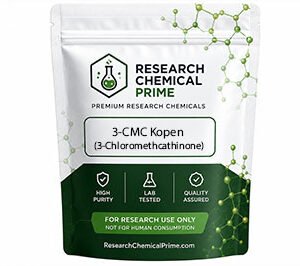
3-CMC (3-Chloromethcathinone) | Cathinone Analytical Reference Standard
3-CMC (3-Chloromethcathinone) is a specialized semi-synthetic substituted cathinone derivative. Structurally analogous to classical cathinones like 4-CMC and mephedrone (4-MMC), but featuring a distinct 3-chloro substitution, it serves as a critical reference standard for advanced scientific investigation into monoamine transporter dynamics, receptor kinetics, and structure-activity relationships (SARs) within the broader cathinone class.
Supplied as a highly pure analytical standard, this format is specifically engineered for laboratories requiring exceptional chemical stability, precise stoichiometry, and reliable dissolution in analytical solvents. It ensures reproducible results for quantitative in vitro workflows and high-resolution instrumental analysis.
Key Features & Quality Assurance
- Exceptional Analytical Purity (≥98%): Rigorously verified via HPLC and GC-MS under strict laboratory protocols to ensure reliable baseline data and minimal synthetic impurities.
- Consistent Quality: Every batch undergoes extensive quality control and uniformity testing to guarantee optimum reliability for sensitive assays.
- Optimized Stability: Supplied in light-proof, airtight, and moisture-resistant packaging to ensure long-term chemical integrity and prevent oxidative degradation.
- Professional Packaging: Shipped in secure, neutral, and compliant packaging designed specifically for the safe transport of analytical reference materials.
Primary Research Applications
- Transporter Affinity Assays: In vitro evaluation of ligand binding and reuptake inhibition kinetics at dopamine (DAT), norepinephrine (NET), and serotonin (SERT) transporters.
- Comparative Structure-Activity Relationship (SAR) Studies: Analytical comparison with 4-CMC, 4-MMC, and other cathinone analogues to map the pharmacological impact of the 3-chloro substitution on transporter selectivity.
- In Vitro Metabolic Profiling: Investigation of enzymatic degradation pathways and metabolic stability in controlled microsomal or cellular models.
- Forensic & Analytical Reference: Utilized as a certified calibration standard for method validation and detection in toxicological laboratories (LC-MS, GC-MS, NMR).
Technical Specifications
| Chemical Name | 3-Chloromethcathinone |
| Molecular Formula | C₁₀H₁₂ClNO |
| Molecular Mass | 197.66 g/mol |
| Physical Form | Crystalline powder |
| Purity | ≥98% (HPLC & GC-MS Verified) |
| Solubility | Freely soluble in methanol, ethanol, and DMSO; moderately soluble in aqueous buffers |
Handling & Stability Considerations
- Controlled Environment: Handle exclusively in a professional, ventilated laboratory setting (preferably under a certified laminar flow hood or fume hood) to prevent aerosol exposure.
- Mandatory PPE: Always utilize appropriate Personal Protective Equipment, including a laboratory coat, chemical-resistant nitrile gloves, and safety glasses.
- In Vitro Concentration Guidelines: For cellular transporter assays, typical working concentrations require careful optimization in the micromolar (µM) range (e.g., 1–100 µM), depending on the specific cell line and assay protocol.
- Storage: Store in a cool, dry, light-proof, and airtight environment, strictly out of reach of unauthorized personnel.
- ⚠️ Critical Warning: This product is an analytical reference standard only. It is NOT approved, tested, or intended for human or animal consumption, therapeutic use, or household application.
Frequently Asked Questions (FAQ)
What is the primary mechanism of action in vitro?
In in vitro assays, 3-CMC functions as a monoamine transporter modulator, exhibiting affinity for dopamine (DAT), norepinephrine (NET), and serotonin (SERT) reuptake inhibition, making it highly valuable for comparative transporter selectivity studies.
How does 3-CMC structurally differ from 4-CMC?
3-CMC is distinguished by the presence of a chlorine atom at the 3-position (meta) of the phenyl ring, whereas 4-CMC features the chlorine at the 4-position (para). In in vitro binding assays, this positional isomerism significantly alters the lipophilicity, steric profile, and transporter binding kinetics.
Is this product suitable for biological administration?
Absolutely not. This product is strictly intended for in vitro analytical and biochemical assays in controlled laboratory environments. Any form of biological administration is strictly prohibited and falls entirely outside the intended scientific use of this reference standard.
What is the regulatory status of this compound?
Regulatory status varies significantly by jurisdiction. Substituted cathinones are frequently subject to strict controlled substance legislation or analogue acts. It is permitted solely for authorized scientific research. The purchaser is solely responsible for verifying compliance and possessing any required institutional permits prior to ordering.
Reviews
There are no reviews yet.