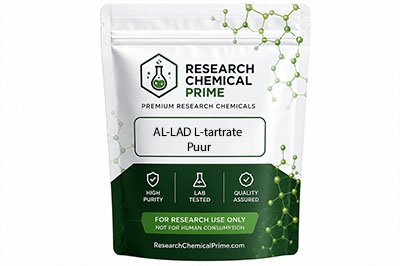
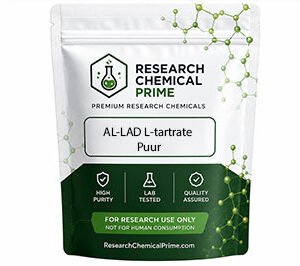
AL-LAD L-Tartrate | Lysergamide Analytical Reference Standard
AL-LAD L-Tartrate (6-allyl-6-nor-lysergic acid diethylamide L-tartrate) is a specialized semi-synthetic lysergamide derivative. Structurally analogous to classical lysergic acid diethylamide but featuring a distinct allyl substitution at the N6 position, it serves as a critical reference standard for advanced scientific investigation into serotonergic signaling pathways, receptor kinetics, and structure-activity relationships (SARs) within the broader lysergamide class.
Supplied as a highly stable L-tartrate salt, this format is specifically engineered for laboratories requiring exceptional chemical stability and rapid, homogeneous dissolution in analytical solvents. It eliminates the degradation risks associated with freebase lysergamides, ensuring reproducible results for quantitative in vitro workflows.
Key Features & Quality Assurance
- High Analytical Purity (≥99%): Rigorously verified via HPLC-UV and HRMS to ensure reliable baseline data and minimal synthetic impurities.
- Optimized Stability: Formulated as an L-tartrate salt and packaged in argon-flushed amber vials to prevent photodegradation and hydrolysis, ensuring a 36-month shelf life under recommended conditions.
- Comprehensive Analytical Certification: Every batch is accompanied by a full analytical dossier, including HPLC-UV chromatograms, HRMS data, Karl Fischer water content, residual solvent profiles, NMR spectra (¹H and ¹³C), and chiral purity analysis.
- GMP-Compliant Production: Manufactured under strict Good Manufacturing Practice guidelines with triple-tier quality control (in-process, final product, and independent validation).
Primary Research Applications
- Receptor Binding Assays: In vitro evaluation of ligand affinity and agonist profiles at specific serotonergic receptor subtypes, particularly 5-HT2A.
- Comparative Structure-Activity Relationship (SAR) Studies: Analytical comparison with LSD and other lysergamide derivatives to map the pharmacological impact of the N6-allyl substitution.
- Forensic & Analytical Reference: Utilized as a certified calibration standard for method validation and detection in toxicological laboratories (LC-MS/MS, GC-MS).
- In Vitro Metabolic Profiling: Investigation of enzymatic stability and metabolic pathways in controlled microsomal or cellular models.
Technical Specifications
| Systematic Name | (6aR,9R)-N,N-diethyl-7-allyl-4,6,6a,7,8,9-hexahydroindolo[4,3-fg]quinoline-9-carboxamide L-tartrate |
| Molecular Formula | C₂₂H₂₉N₃O₂ · C₄H₆O₆ |
| Molecular Mass | 511.55 g/mol |
| Purity | ≥99% (HPLC-UV Verified) |
| Physical Appearance | White to light beige crystalline powder |
| Solubility | 20 mg/mL in water (at 20°C); freely soluble in methanol |
| Melting Point | 185–190°C (with decomposition) |
Handling & Safety Protocols for Researchers
- Controlled Environment: Handle exclusively in a professional, ventilated laboratory setting. Use of a Type B2 certified fume hood is mandatory to prevent aerosol exposure.
- Mandatory PPE: Always utilize appropriate Personal Protective Equipment, including Type 5/6 protective clothing, double nitrile gloves, sealed safety goggles, and FFP3 respiratory protection.
- First Aid Measures:
- IF IN EYES: Rinse cautiously with water for at least 30 minutes. Seek immediate medical evaluation.
- IF ON SKIN: Wash immediately and thoroughly with mild soap and water.
- IF INHALED: Remove person to fresh air and keep comfortable for breathing. Seek immediate medical evaluation.
- Storage Requirements: Store strictly at -20°C in sealed, argon-flushed amber vials. This compound is highly photosensitive, oxygen-sensitive, and hygroscopic.
- ⚠️ Critical Warning: This product is an analytical reference standard only. It is NOT approved, tested, or intended for human or animal consumption, therapeutic use, or household application.
Frequently Asked Questions (FAQ)
Why is this supplied as an L-tartrate salt?
The L-tartrate salt form significantly enhances the chemical stability, crystallinity, and aqueous solubility of the compound compared to its freebase counterpart, making it the preferred format for rigorous, reproducible in vitro analytical workflows.
What analytical documentation is provided?
Each batch includes a comprehensive Certificate of Analysis (CoA) detailing HPLC-UV chromatograms (254 nm), HRMS data (ESI+ mode), Karl Fischer water content, residual solvent profiles, NMR spectra (¹H and ¹³C), and chiral purity analysis.
What are the regulatory requirements for purchasing?
This compound is strictly regulated in many jurisdictions (e.g., classified under Schedule I of the Dutch Opium Act or equivalent regional frameworks). Distribution is restricted exclusively to licensed, accredited research institutions. Proof of institutional qualification is required prior to order fulfillment.
Reviews
There are no reviews yet.